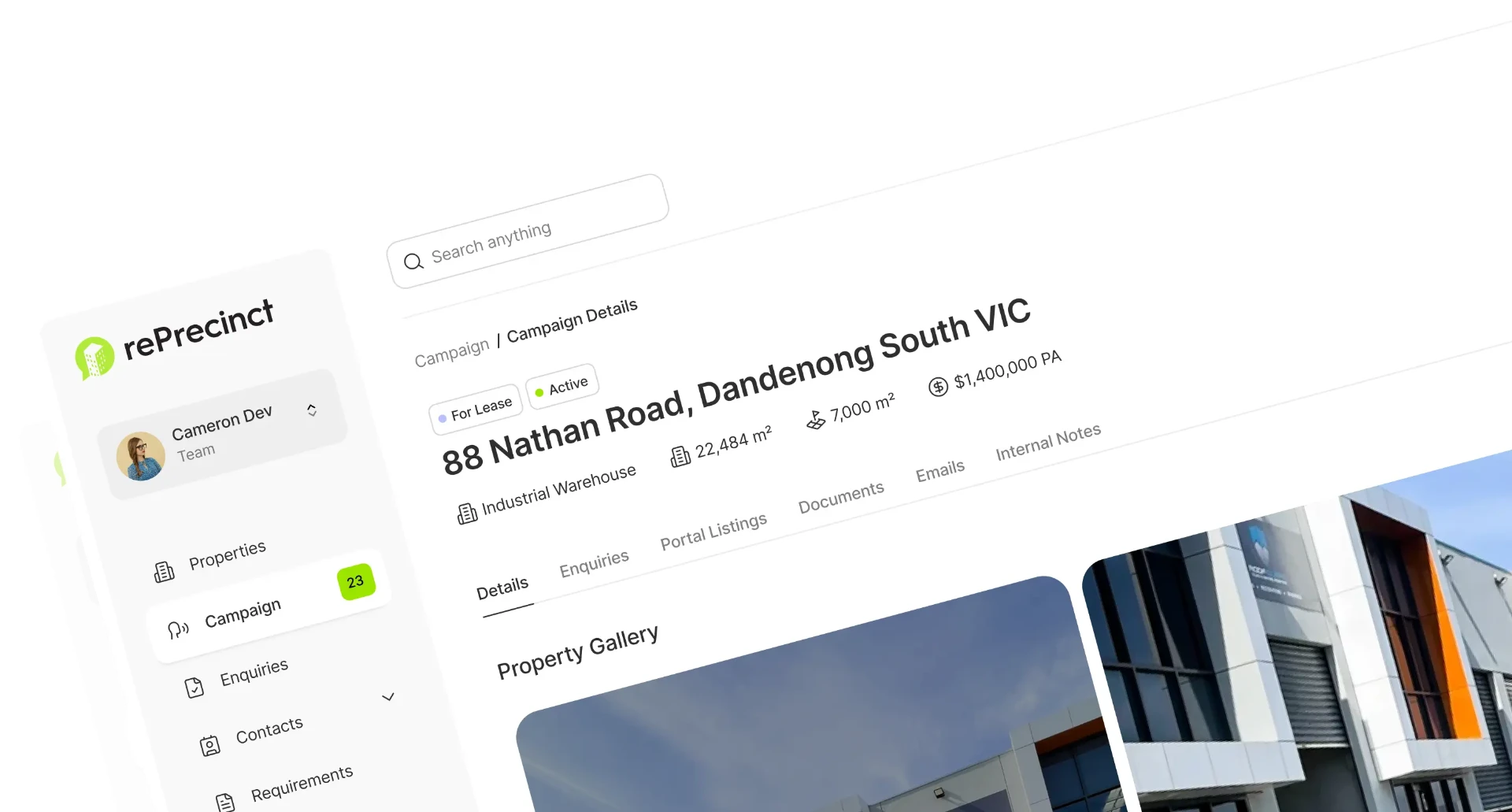
rePrecinct vs VTS
VTS serves landlords and asset teams tracking leasing across portfolios. rePrecinct serves agencies running enquiries, requirements, listings and deals. Compare the primary user of each.

Which CRM is the better fit?
Both platforms provide software for real estate teams, but they approach the commercial workflow differently. Use this guide to help you decide.
rePrecinct may suit you if...
- You act for vendors, landlords and occupiers as an agency.
- Enquiries, requirements and matching are daily work.
- You need campaign and vendor reporting.
- Agency wide pipeline visibility is the goal.
VTS may suit you if...
- You are a landlord or asset manager tracking leasing.
- Portfolio level occupancy and deal analytics matter.
- Space and stacking plans drive decisions.
- Your agency CRM sits elsewhere.
The biggest difference between rePrecinct and VTS.
VTS centres on the landlord view of leasing performance across assets. rePrecinct centres on the agency view, from enquiry capture through requirement matching to a completed transaction.
Where VTS is strong
- Strong leasing pipeline visibility for landlords.
- Space, stacking and occupancy data across portfolios.
- Benchmarking and market analytics.
- Widely used by institutional owners.
Where rePrecinct takes a different approach
- Commercial property entities arrive connected, so contacts, companies, properties, listings, and requirements relate on day one.
- Buyer and tenant requirements drive matching, so your team sees the right stock against the right brief.
- MarketIQ reporting turns campaign, enquiry, and deal data into vendor-ready insight.
- Australian commercial agency workflow, local portals, and local onboarding support.
Compare the workflows that matter.
Detailed capability comparison based on publicly documented features and verified commercial agency workflows.
| Capability | rePrecinct | VTS |
|---|---|---|
Primary user | Commercial agency | Landlord and asset team |
Enquiry capture | Native | Not a core function |
Buyer and tenant requirements | Native | Tenant tracking |
Requirement matching | Native workflow | Not a core function |
Leasing pipeline | Deal pipeline | Core strength |
Portfolio analytics | MarketIQ | Core strength |
Australian portals | Supported integrations | Not documented |
How the commercial deal workflow compares.
A visual breakdown of data relationships and process flow within each platform.
rePrecinct
Purpose-built commercial relationships
VTS
Based on publicly documented workflows
Thinking about switching from VTS?
Changing CRM does not mean your agents should rebuild years of commercial property relationships manually. Our team has helped dozens of Australian agencies migrate from VTS.
Talk to Us About SwitchingReview
Existing contacts, properties, listings and activity history.
Map
Translate your current data into the rePrecinct commercial structure.
Migrate
Securely move agreed records with our data specialist team.
Connect
Configure portal feeds and supported commercial integrations.
Onboard
Prepare the team with tailored commercial agency training.
Widen the shortlist
A head to head answers one question. The alternatives guides review 6 to 8 platforms side by side so you can book demos with a clear shortlist.



rePrecinct vs VTS: common questions
Disclaimer: All product names, logos, brands, and trademarks are property of their respective owners. Use of these names, logos, and brands does not imply endorsement. rePrecinct is an independent software platform. Information is compiled from public documentation and is subject to change. Read our content accuracy and trademark policy or contact us if you identify any inaccuracies.
Compare both using your real workflow.